Blitzkrieg in World War 2, interestingly enough, was not known as blitzkrieg by the Wehrmacht as an official military term. It was used by journalists during the war, and used as propaganda by the German military complex, but as an official military term, it did not really exist. Some German officers even argued that it wasn’t even an accepted military concept.
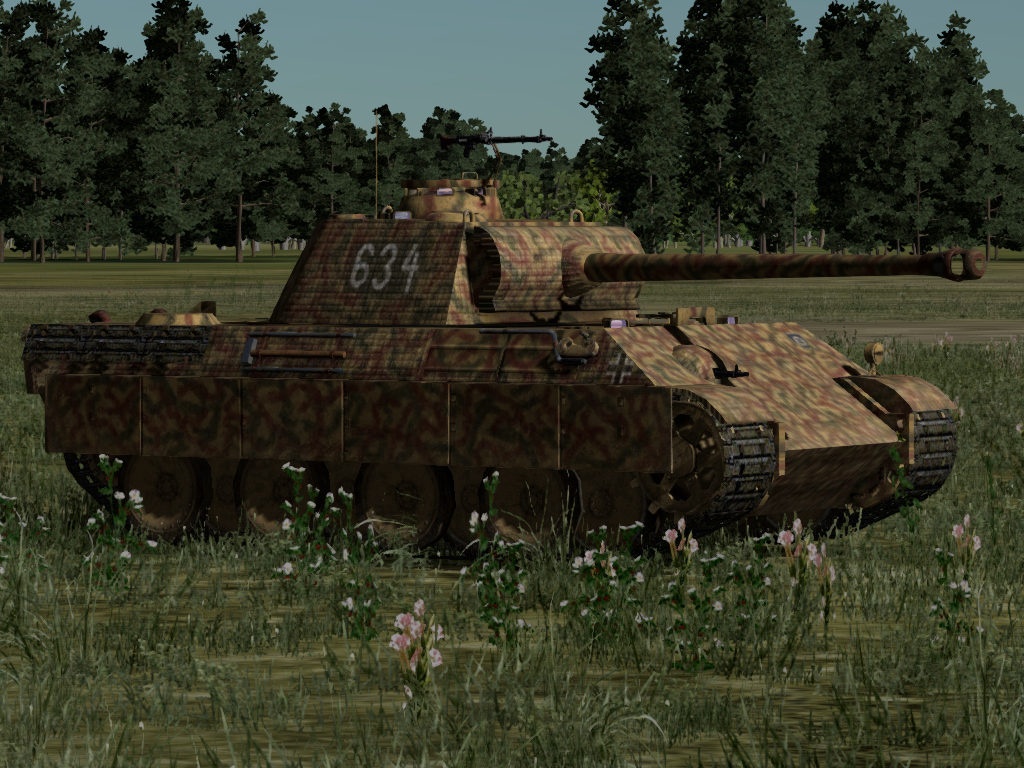
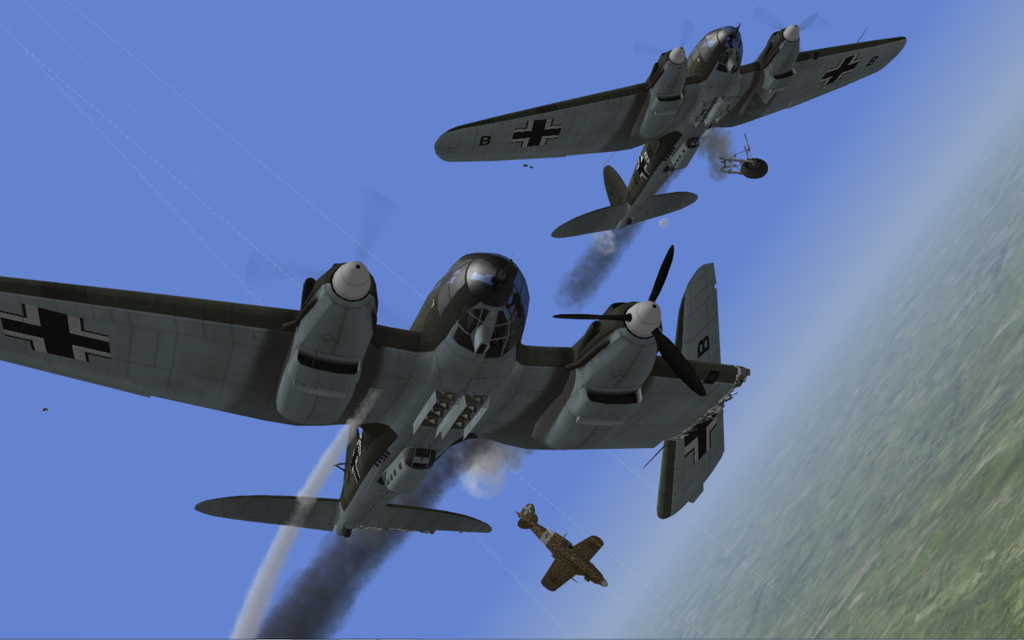
The term “blitzkrieg,” in German, means “lightning war,” a way of describing a military force in dense formation, mainly armored, motorized vehicles (see tank production during World War II) with air support. The idea is to break through defensive lines quickly, with superior force, and then continue to move forward while the enemy regroups, and before the enemy has time to form a strategic response.
The idea of breaking through defensive lines was not a new concept, but in the past an army, once it had broken through those lines of defense, would then turn and take care of attacks on the flanks and wings, thus becoming stagnate. The danger of this approach is that a prolonged battle can ensue, and that means reinforcements can be gathered and battle plans for a counter-offensive can be devised. Not so with a blitzkrieg. With a blitzkrieg there is no stopping, no hesitation, and no mopping up. It is full-speed ahead warfare, forcing the enemy to constantly adjust in an attempt to catch up with the invading force.
And in the early years of World War 2, it worked to perfection by the Germans.
The German strategy was based on the Schwerpunkt, or focal point. The Schwerpunkt was considered the center of gravity on a battlefield, the point where the maximum effort would be made, and once a breach was made at the Schwerpunkt, the attacking unit would continue to set objectives behind the enemy front line, moving so quickly that the opponent was basically paralyzed and unable to react quickly enough. The use of fast-moving vehicles, unencumbered by slow-moving ground troops, made this method particularly effective.
But there was a main weakness of the blitzkrieg method of warfare . . . actually two main weaknesses . . . weather and terrain!
In order for a blitzkrieg to be effective, to move quickly, flat, firm, and unobstructed terrain was necessary. Terrain like that was found early on in the Western Front of World War 2. Armored vehicles were unable to move quickly, if at all, over bomb-cratered land or heavily-forested land. Slowing up to maneuver around obstacles meant the armored vehicles would then be susceptible to attack by ground forces. Similarly, poor weather could greatly hamper a blitzkrieg. Mud and snow were the natural enemies of this type of warfare, a fact which was born out during the prolonged battles on the Eastern Theater of World War 2.
This article was brought to you by HiTech Creations, the makers of Aces High, the leader in World War 2 flight simulators. We hope you enjoyed this mini-history lesson about the blitzkrieg, and we invite you to join Aces High weekly for more interesting information about World War 2. We also invite you to try our combat flight simulator to discover just how much fun online warfare can be.